
LOADING...
Compare local companies, check their details, contact them directly.
Join over 21 listed Irish businesses across the platform.
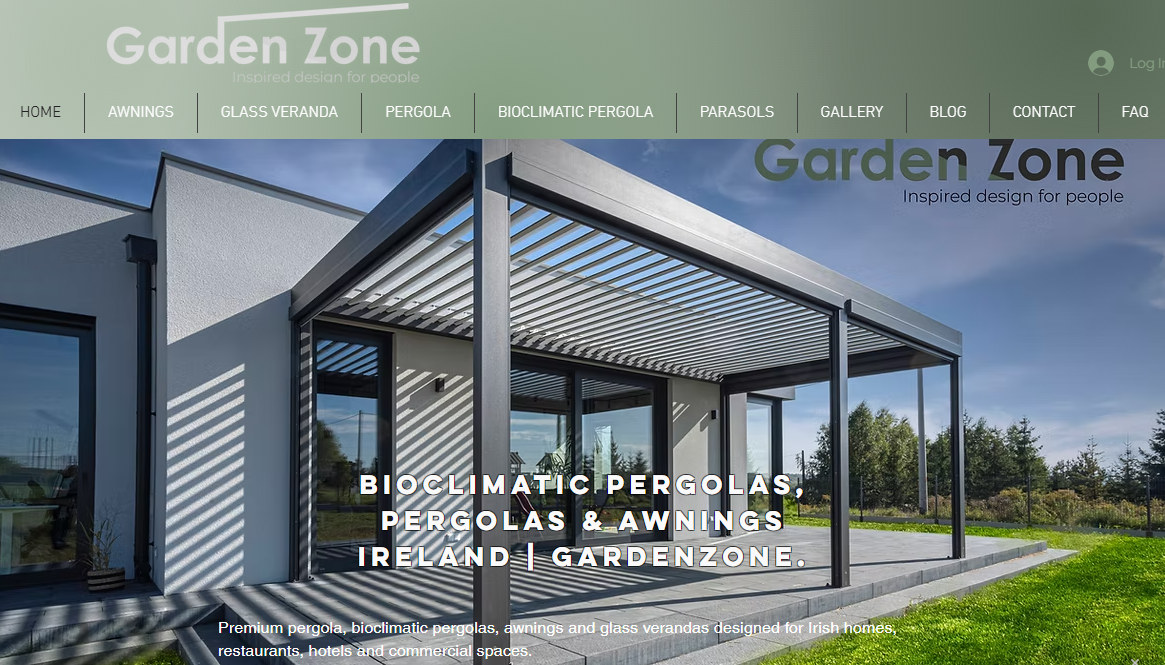

Irish Specialists in Louvred Pergolas, Shading Systems & Bespoke Outdoor Rooms
Dublin & Nationwide, Ireland
Gardenzone LTD designs and installs premium bioclimatic pergolas, retractable pergolas, custom awnings, and bespoke garden rooms across Ireland. Enhance your outdoor space with watertight, motorized, and wind-resistant outdoor shading systems.
This page is where your potential customers are searching for professional services in Ireland. Every month you are not listed on this page, your competitors are claiming the leads and securing the jobs instead.
Get listed today for just 190 euro per year plus VAT. Secure your spot on our directory and start receiving direct enquiries.
Get ListedModular construction has emerged as a high-performance, cost-effective alternative to traditional block-built homes in Ireland. Known also as prefab homes, these structures are manufactured in sections within controlled factory environments before being transported and assembled on-site. Vetted modular building contractors offer turnkey solutions that include groundworks, structural engineering, and utility connections, delivering A-rated homes in a fraction of the time required for traditional builds.
The cost of a modular home varies significantly depending on whether you purchase a "turnkey" package (which includes groundworks, service connections, and interior finishes) or a "wind and watertight" shell. A standard 1-bed modular home (40 – 50 sqm) ranges from 85,000 to 110,000 euro, making it ideal for independent living units or site annexes. For a 2-bed modular home (70 – 85 sqm), prices average between 130,000 and 175,000 euro turnkey. Larger 3 or 4-bed family modular homes (110 – 150 sqm) typically range from 195,000 to 280,000 euro.
Traditional block construction costs in Ireland range from 2,200 to 2,800 euro per square metre (excluding site acquisition). In contrast, factory-built modular structures range from 1,600 to 2,100 euro per square metre turnkey. The financial savings stem from reduced on-site labor costs, shorter build times (typically 12–16 weeks total), and zero waste materials. Prefab extensions also offer a cost-effective way to add space without the disruption of a traditional build.
A common misconception in Ireland is that modular or wooden homes do not require planning permission. Any permanent structure intended for habitation requires planning permission from your local county council, regardless of its construction method. This applies to new primary dwellings, 2 bed modular homes ireland placed on a family site, and log cabins used for permanent occupancy. A modular structure under 25 square metres built to the rear of a dwelling house does not require planning permission, provided it is not used as a bedroom or independent dwelling.
To be certified for permanent habitation and qualify for a mortgage, a modular home must comply with Irish Building Regulations (specifically Part L compliance). Modern modular builders construct homes to meet A-Rated BER (Building Energy Rating) standards. They achieve this using Structural Insulated Panels (SIPs) or high-grade timber framing, triple-glazed windows, Mechanical Ventilation with Heat Recovery (MVHR), and air-to-water heat pump heating systems.
When researching the Irish modular market, look for manufacturers with local production facilities and a track record of building to Irish standards. Companies like Hurley Modular Homes, Glanmire Modular, and Magee are examples of builders who construct units engineered for the wet, temperate Irish climate. Avoid importing uncertified kit homes that do not comply with NSAI (National Standards Authority of Ireland) guidelines, as local authorities can order their removal.
Verify that the modular builder holds active public liability, employers' liability, and professional indemnity insurance. For mortgage approval, the build must be certified with a structural warranty (such as HomeBond or Global Home Warranties) and hold an NSAI Agrément certificate. Check their previous client references and visit completed projects where possible.
Yes, but the construction must be certified. Irish banks and mortgage lenders require the build to have a structural warranty (such as HomeBond or Global Home Warranties) and an NSAI Agrément certificate. The contract must be with a registered, insured builder.
The factory fabrication process takes 6 to 10 weeks. Once shipped to the site, assembly on the foundation pads typically takes 3 to 7 days. Service connections, plumbing, and internal finishes are completed in the subsequent 3 to 4 weeks.
Yes. Modern modular homes built with steel frames or treated structural timber have a design lifespan of 60+ years, matching traditional block builds. They are fully insulated and structurally engineered to withstand Irish weather conditions.